
Crawlspace Wildlife Removal in Raleigh, NC
Crawlspace Wildlife Removal in Raleigh, NC
Hearing movement beneath your floors, smelling an unexplained odor, or finding damaged vents around your crawlspace?
A crawlspace can provide wildlife with exactly what many animals are looking for: shelter from weather, limited human activity, darkness, and access beneath the structure. Homeowners may not realize an animal is present until they hear nighttime movement, discover droppings, notice disturbed insulation, find a damaged vent screen, or see wildlife repeatedly entering near the foundation.
Sustainable Pest Systems provides professional crawlspace wildlife removal in Raleigh, NC for homeowners dealing with unwanted animals beneath the house. The goal is to identify what is using the crawlspace, determine how it is getting inside, address the active wildlife problem, and evaluate the structural conditions that may allow future entry.
Signs an Animal May Be Living Under Your House
Crawlspace wildlife is often easier to hear than see. Scratching, rustling, slow movement, heavier thumping, or activity beneath specific rooms may be noticeable during different times of day depending on the animal. Odor, droppings, disturbed insulation, tracks, nesting material, and damaged vents can provide additional clues.
The type of evidence matters because several animals can create similar symptoms. A homeowner hearing movement beneath a floor cannot reliably determine the species from sound alone. Opossums, raccoons, rodents, snakes, and other wildlife may all use protected areas beneath homes under the right conditions.
If you are trying to determine whether the activity is coming from the crawlspace or another part of the home, review our guide to signs of wildlife in attics and crawlspaces for additional evidence homeowners may notice.
Possible signs of crawlspace wildlife include scratching or movement beneath floors, damaged vent covers, displaced access doors, droppings, odor, disturbed insulation, tracks, nesting material, and repeated animal activity near the foundation.
What Animals Can Get Into a Raleigh Crawlspace?
Different wildlife species may use crawlspaces for different reasons. Opossums can take advantage of quiet sheltered spaces beneath homes, while raccoons may enter through larger damaged openings. Rats and mice can use much smaller gaps and may remain hidden within insulation, utility areas, or other protected sections of the crawlspace.
Snakes may also enter crawlspaces that provide shelter or access to prey such as rodents. A snake beneath the house does not necessarily mean there is a larger snake problem, but repeated sightings can justify evaluating both structural access and possible prey activity.
Because species identification affects the removal strategy, the best approach is to evaluate the evidence rather than assuming every sound beneath the home is caused by the same animal.
How Wildlife Gets Into Crawlspaces
Crawlspace entry problems usually begin somewhere along the foundation or another low section of the structure. Damaged vent screens, loose crawlspace doors, foundation openings, utility penetrations, gaps beneath additions, and unprotected areas around porches can create routes beneath the house.
Some openings develop gradually as materials deteriorate or shift. Others may have existed since construction but only become noticeable after wildlife begins using them. Animals can also enlarge weak screens, loose trim, or damaged materials once they discover a sheltered area behind them.
Sustainable Pest Systems also provides wildlife exclusion in Raleigh for homeowners who need help identifying and addressing structural entry points after an active wildlife problem has been resolved.
Removing Wildlife Before Sealing the Crawlspace
A damaged vent or foundation opening may look like an obvious repair, but sealing an active entry point before confirming that animals are out can trap wildlife beneath the home. This is especially important when the species is uncertain or there is a possibility that dependent young are present.
The removal sequence should therefore begin with identifying the animal and determining how the crawlspace is being used. Once the active wildlife problem has been appropriately addressed, relevant openings can be evaluated for exclusion or repair.
For more general animal problems around the home, homeowners can also visit our Raleigh wildlife removal services page for information about wildlife in attics, crawlspaces, exterior structures, and other residential areas.
Crawlspace Damage and Conditions After Wildlife Activity
Removing an animal does not necessarily eliminate the evidence it leaves behind. Depending on the species and how long the crawlspace was being used, homeowners may find droppings, odor, disturbed insulation, nesting material, damaged vent screens, or other affected areas after the wildlife activity has stopped.
These conditions should be evaluated based on what is actually present. A short-term animal visit is different from repeated occupation of the same crawlspace, and recommendations should reflect the extent and location of the evidence rather than assuming every wildlife problem requires the same corrective work.
If the animal beneath the home is believed to be an opossum, homeowners can also review our opossum removal in Raleigh page for species-specific information about crawlspaces, decks, porches, and other sheltered areas.
Preventing Wildlife From Re-Entering the Crawlspace
Long-term prevention focuses on the structural route that made the crawlspace accessible. Once wildlife is no longer occupying the space, damaged vents, loose access doors, foundation openings, utility gaps, and other relevant entry points can be prioritized for exclusion.
Conditions immediately outside the crawlspace can matter as well. Dense vegetation, debris, stored materials, outdoor food sources, and rodent activity can contribute to wildlife spending more time near the foundation. Correcting the entry point is usually the priority, but reducing nearby shelter and attractants can support the overall prevention strategy.
Fill out some info and we will be in touch shortly!
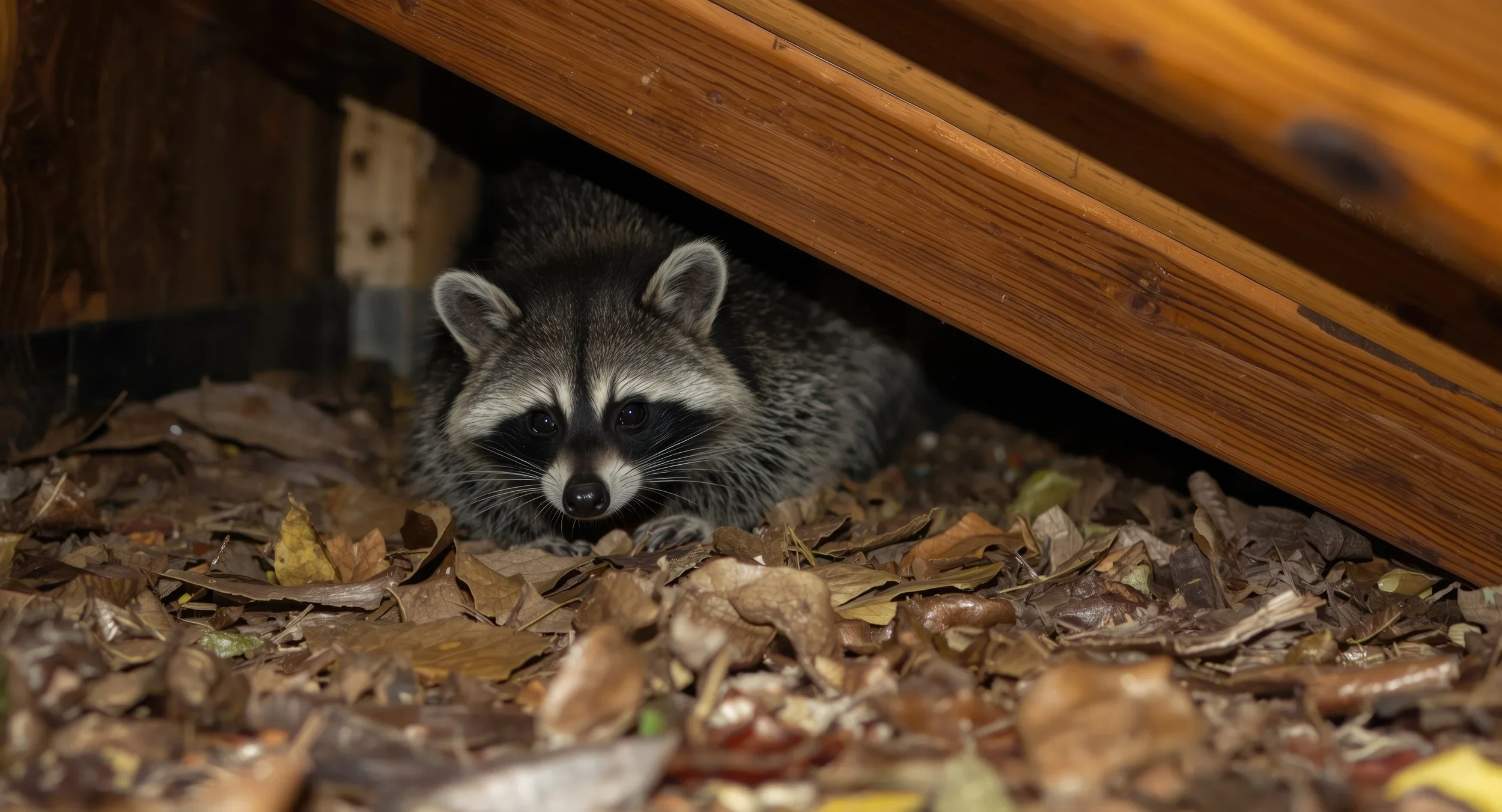
Signs Wildlife May Be Living in Your Crawlspace
Crawlspace wildlife can remain hidden for days or longer because the animal is separated from the occupied rooms above. Homeowners often discover the problem through sounds, odors, damaged vents, droppings, or exterior activity rather than seeing the animal directly.
Noises Beneath the Floor
Scratching, rustling, slow movement, heavier thumps, or repetitive activity beneath a particular room can indicate that an animal is moving through the crawlspace.
Droppings, Odor, or Disturbed Material
Droppings, nesting material, displaced insulation, unusual odor, tracks, or other evidence may help determine where wildlife has been spending time beneath the home.
Damaged Vents or Access Doors
A bent screen, missing vent cover, loose crawlspace door, or visible opening around the foundation can provide a direct route beneath the structure.
Not sure whether the activity is beneath the home or somewhere else in the structure? Review our guide to signs of wildlife in attics and crawlspaces.
Wildlife That May Use a Raleigh Crawlspace
Different animals can use the same sheltered space, and their evidence may overlap. Identifying what is actually beneath the home is important because removal and exclusion should match the species rather than relying on assumptions based only on noise.
- Opossums using quiet, protected areas beneath the home
- Raccoons entering through larger foundation or vent openings
- Rats or mice using small gaps around foundations and utilities
- Snakes entering sheltered areas or following available prey
- Other small wildlife using damaged screens or existing openings
- Animals sheltering beneath porches connected to the crawlspace
- Wildlife moving between foundation cavities and utility areas
- Animals returning to a previously accessible crawlspace opening
If opossum activity is suspected, visit our Raleigh opossum removal page for information about animals beneath homes, decks, sheds, and porches.
Common Crawlspace Entry Points Around the Foundation
Finding evidence beneath the house is only one part of diagnosing a crawlspace wildlife problem. The exterior should also be evaluated to determine how the animal is moving between the yard and the protected space below the home.
Crawlspace Vents
Torn screens, missing covers, damaged frames, or vents that no longer fit securely can provide wildlife with an accessible opening through the foundation.
Access Doors & Foundation Gaps
Loose doors, gaps beneath access panels, damaged masonry areas, and openings where structural materials meet may provide routes into the crawlspace.
Utility & Addition Openings
Areas around pipes, wiring, service lines, porches, additions, and other construction transitions can leave protected gaps near ground level.
Once active wildlife has been addressed, our wildlife exclusion services in Raleigh can help focus on structural openings that may allow animals back inside.
Our Crawlspace Wildlife Removal Process
The process begins with understanding the activity beneath the home rather than immediately sealing openings or assuming which animal is present. Species, access, interior evidence, and the condition of the crawlspace all affect the appropriate response.
Review What You Have Seen or Heard
We consider where noises occur, what time activity is most noticeable, whether an animal has been seen outside, and what other evidence has appeared around the home.
Evaluate Accessible Crawlspace Areas
Evidence such as droppings, tracks, disturbed materials, nesting activity, odor, and travel routes can help narrow down what is using the space.
Address the Active Wildlife
The removal approach should reflect the species, location, occupancy of the crawlspace, and whether dependent young or other circumstances affect how the animal should be handled.
Evaluate the Route of Entry
After the active wildlife problem is resolved, crawlspace vents, doors, foundation openings, utility gaps, and other relevant access points can be reviewed for prevention needs.
Sustainable Pest Systems also provides broader wildlife removal services in Raleigh for animal problems involving attics, rooflines, garages, and other parts of residential structures.
Conditions That May Remain in the Crawlspace
An animal leaving the crawlspace does not automatically erase the evidence of its activity. What remains depends on the species, length of occupation, location used beneath the home, and condition of the crawlspace itself.
- Droppings concentrated along travel or resting areas
- Lingering odor in previously occupied sections
- Disturbed, compressed, or displaced insulation
- Nesting material or debris left beneath the home
- Damaged crawlspace vents, screens, or access doors
- Tracks or disturbed soil near regular travel routes
- Foundation openings that remain accessible from outside
- Areas that should be monitored for renewed activity
The extent of remaining evidence should be evaluated before assuming every crawlspace wildlife problem requires the same cleanup or corrective work.
Why Crawlspace Wildlife Problems Can Return
Removing an animal solves the immediate occupancy problem, but another animal may eventually discover the same protected space if the structural access remains available. Prevention therefore focuses on the crawlspace itself as well as the surrounding foundation area.
The Original Opening Remains
A damaged vent, loose door, foundation gap, or utility opening can remain usable even after the original animal is gone.
Another Animal Finds the Space
A sheltered crawlspace can be attractive to more than one type of wildlife, so recurring activity does not necessarily mean the same animal returned.
Nearby Conditions Support Activity
Dense vegetation, debris, stored materials, food sources, or rodent activity near the foundation may increase the amount of wildlife moving close to the home.
If rodents are part of the crawlspace problem, Sustainable Pest Systems also provides rodent control in Raleigh for homes dealing with mice and rats.
Common Questions About Animals Under Raleigh Homes
These answers address common concerns from homeowners hearing wildlife beneath floors, finding damaged crawlspace vents, or trying to determine what is living under the house.
What animal is making noise under my house?
Sound alone usually cannot confirm the species. Opossums, raccoons, rats, mice, and other wildlife can create activity beneath floors. Timing, droppings, tracks, entry-point size, nesting evidence, and other physical signs can help with identification.
How do animals get into a crawlspace?
Common routes can include damaged vents, loose access doors, foundation openings, utility penetrations, and gaps beneath porches or additions. The relevant opening depends on the construction of the home and animal involved.
Should I close the crawlspace opening immediately?
Not if wildlife may still be inside. Sealing an active opening without confirming the space is clear can trap an animal beneath the home. The situation should also account for the possibility of dependent young.
Can snakes live in a crawlspace?
Snakes can enter protected spaces beneath homes, particularly when suitable access, shelter, or prey is available. A single sighting does not establish an ongoing problem, but repeated activity can justify evaluating entry points and prey conditions.
Does an animal under the house always damage the crawlspace?
No. The amount of disturbance varies considerably by species and how the area has been used. Some situations may leave little evidence, while others can involve droppings, nesting material, displaced insulation, damaged vents, or odor.
What should happen after the wildlife is removed?
The relevant entry points can be evaluated along with any remaining evidence beneath the home. Prevention may involve securing damaged vents, doors, foundation gaps, or other accessible openings based on what was found.
Why does wildlife keep getting into my crawlspace?
Repeated problems can occur when an original access point remains open, another structural gap develops, or different animals continue discovering the same protected space beneath the home.
Phone
(919) 886-7378
Hours
Monday–Friday
8am-5pm
Locations
3021 Stony Brook Dr. Raleigh NC 27604