
Bat Removal & Exclusion Services
Bat Removal & Exclusion Services in Raleigh and the Triangle
Seeing bats leave your roof at dusk, hearing light movement above the ceiling, or finding droppings near an attic vent?
Bat problems are not always obvious from inside the home. In Raleigh, Cary, Apex, Chapel Hill, Holly Springs, Wake Forest, Zebulon, and nearby North Carolina communities, homeowners may first notice bats circling the roofline at sunset, dark staining around a small opening, or faint squeaking coming from an attic, soffit, chimney, or wall cavity.
Once bats begin using a structure, simply closing the first visible gap may not solve the problem. Bats can enter through narrow roofline openings and may use more than one section of the home. Sustainable Pest Systems provides professional bat removal and exclusion services designed to identify active entry points, allow bats to leave safely, and reduce the chance of them returning.
Bat Inspections for Homes Across the Triangle
A proper bat inspection should examine more than the area where activity was first noticed. Bats may enter near a loose soffit, gable vent, fascia gap, chimney flashing, roof return, or siding transition and then move into another part of the attic or structure.
Sustainable Pest Systems looks for visible openings, staining, droppings, worn edges, loose materials, and other signs that help show how bats are using the property. We also consider when the activity occurs and whether the evidence fits bats or another animal such as squirrels, birds, mice, or raccoons.
Homeowners who are still trying to identify what they hear can review our guide to scratching and squeaking sounds in the attic .
Common bat access points include gable vents, soffit gaps, fascia boards, chimney flashing, roof intersections, attic louvers, siding transitions, and small openings around older exterior materials.
Do Not Seal an Active Bat Opening Too Early
Sealing an opening while bats are still inside can trap them in the attic or push them into finished living areas. Bat exclusion should be completed in the correct order and at an appropriate time, especially when young bats may be present and unable to leave on their own.
Sustainable Pest Systems helps North Carolina homeowners evaluate current activity, locate likely entry points, and plan the next steps for one-way exclusion and preventive sealing. Our team also provides broader wildlife removal services when attic signs could involve another type of animal.
Fill out some info and we will be in touch shortly!
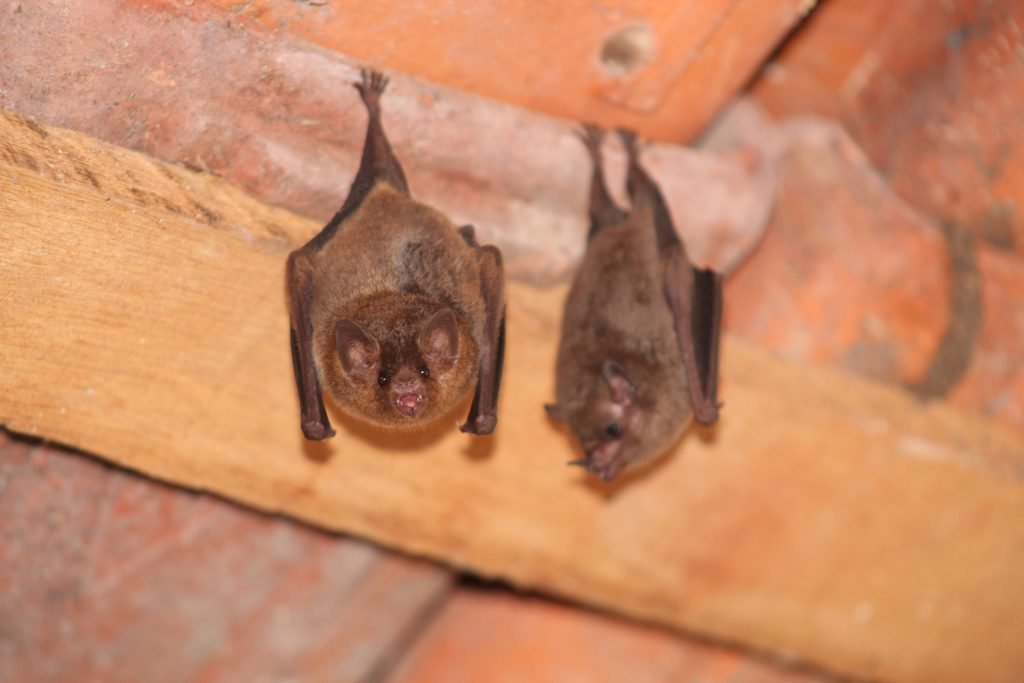
How Homeowners Notice Bats Around the Attic or Roofline
Bat activity around Triangle-area homes is often quiet and easy to overlook. Homeowners may notice several bats leaving the same roof opening at dusk, faint chirping above a ceiling, dark staining near a vent, or small droppings collecting beneath an exterior gap.
Evening Flight Activity
Bats repeatedly emerging from the same soffit, chimney, vent, or roof edge around sunset may indicate a roost inside the structure.
Droppings Below an Opening
Small accumulations beneath a wall, vent, window, or roof transition may reveal an exit point even when the opening itself is difficult to see.
Staining or Indoor Sightings
Darkened exterior edges, recurring attic odor, or a bat appearing indoors without an obvious open door can justify a closer structural inspection.
Unsure whether the sound is coming from bats or another animal? Review this guide to scratching and squeaking sounds in the attic for additional clues.
Where Bats Enter Homes Across the Triangle
Homes in Raleigh, Cary, Apex, Chapel Hill, Holly Springs, Wake Forest, Zebulon, and surrounding communities can have narrow construction gaps that are barely noticeable from the ground but still provide access to an attic or roof cavity.
- Gable vents, attic louvers, and damaged or unsecured vent screening
- Openings where soffits, fascia boards, and roof decking come together
- Loose flashing around chimneys, dormers, valleys, and roof transitions
- Narrow gaps beneath ridge caps, shingles, drip edges, or lifted trim
- Siding corners and upper-wall intersections near the roofline
- Spaces around utility lines, conduit, pipes, or exterior penetrations
- Construction joints between additions, garages, porches, and the main house
- Aged materials that have separated after storms, repairs, or normal settling
Why Removing Bats Requires More Than Closing a Roof Gap
A visible opening may only be one part of the bat problem. Effective exclusion depends on confirming where bats are leaving, identifying secondary gaps, and completing the work in an order that does not trap animals inside the structure.
Bats May Still Be Inside
Permanently closing an active exit too early can confine bats within an attic, wall cavity, chimney chase, or finished portion of the home.
Timing Affects the Plan
Seasonal activity and the possible presence of young bats must be considered before one-way exclusion devices and final repairs are installed.
More Than One Gap May Exist
Bats can use a primary exit while testing nearby roofline weaknesses, making a full exterior inspection important for long-term prevention.
Sustainable Pest Systems handles bat concerns through professional wildlife inspection and removal services focused on animal identification, structural access, and prevention.
Our Bat Removal and Exclusion Process
Sustainable Pest Systems helps homeowners move from uncertain sightings or attic noises to a clear understanding of where bats are roosting, how they are entering, and what must happen before the structure can be fully sealed.
Review the Activity
We consider where bats have been seen, when they appear, whether activity repeats at dusk, and whether anyone has encountered a bat indoors.
Inspect the Structure
The roofline, vents, soffits, fascia, flashing, siding transitions, chimneys, and accessible attic areas are evaluated for openings and bat evidence.
Prepare the Exclusion Strategy
Active exits are distinguished from secondary openings so one-way devices and preventive sealing can be planned in the correct sequence.
Complete Final Sealing
After bats have had the opportunity to leave and activity has ended, temporary devices can be removed and remaining access points addressed.
Older rooflines, mature trees, and hidden construction gaps can attract several kinds of wildlife. Learn more about preventing wildlife intrusions in Triangle-area homes .
How Homeowners Can Reduce Future Bat Entry
Lasting prevention depends on correcting the narrow exterior gaps bats can reuse after exclusion—not simply responding to the one opening where activity was first noticed.
- Do not permanently close an active exit before the bats have been excluded.
- Repair loose soffits, separated fascia, lifted flashing, and damaged trim.
- Protect attic vents and louvers without blocking necessary ventilation.
- Inspect roof intersections, dormers, chimneys, and attached additions.
- Recheck vulnerable exterior materials after storms or roofing work.
- Watch the roofline at dusk if bat activity appears to have returned.
Inspection and preventive sealing can also address access used by other animals. Explore our broader wildlife removal and exclusion services .
Other Animals That Can Be Mistaken for Bats
A noise near an attic vent does not automatically confirm a bat colony. The timing, weight, sound pattern, droppings, exterior damage, and type of opening can help distinguish bats from other wildlife using the structure.
Birds Near Roof Vents
Chirping, fluttering, and daytime activity around vents or exhaust openings may point to nesting birds rather than bats.
Squirrels in the Attic
Fast daytime running, gnawing, and larger nesting material may indicate squirrels. Learn more about squirrel removal .
Raccoon or Rodent Activity
Heavy movement may point to raccoons, while small repetitive scratching can indicate mice or rats. Explore raccoon removal in Raleigh .
Bat Removal and Exclusion Questions
These answers address common concerns from homeowners in Raleigh, Cary, Apex, Chapel Hill, Holly Springs, Wake Forest, Zebulon, and nearby Central North Carolina communities.
How can I tell whether bats are living in my attic?
Repeated dusk activity, bats emerging from the same opening, droppings below the roofline, staining, attic odor, and faint chirping can all justify an inspection.
Can bats enter through a very small roof gap?
Yes. Narrow openings around soffits, fascia, flashing, vents, siding transitions, and roof joints may provide enough space for bats to enter.
Why shouldn’t I seal the opening immediately?
Closing an active exit can trap bats inside or redirect them into another section of the structure. The activity and timing should be evaluated first.
How are bats removed without trapping them?
A professional exclusion plan generally uses designated exits that allow bats to leave while restricting their ability to return through the same opening.
How can I help prevent bats from returning?
Prevention may include sealing secondary gaps, repairing loose exterior materials, protecting vents, correcting flashing problems, and monitoring previously active roof areas.
Phone
(919) 886-7378
Hours
Monday–Friday
8am-5pm
Locations
3021 Stony Brook Dr. Raleigh NC 27604